How Do Pure-PV Solar Battery Storage Systems Outperform Standard Inverters in Commercial Projects?
Aug 31, 2026
For commercial solar systems, a Solar Battery Storage System significantly outperforms standard inverters. You achieve superior solar energy efficiency, solar reliability, and solar cost savings over the long term. This clean energy solution integrates solar and battery storage for maximum energy independence and lower operational costs. Solar and battery storage systems provide scalability, reduce energy bills, and improve energy reliability.
⚡ Key Takeaways
Pure-PV systems capture more energy from your panels. Advanced technology finds the best power point even in shade.
These systems keep your business running during outages. They switch to battery power in milliseconds.
You save money and earn money. Integrated systems lower costs and let you join demand response programs.
Efficiency Gains with Solar Battery Storage System
Advanced Energy Harvesting
Your commercial solar array faces partial shading from neighboring buildings, HVAC units, or passing clouds. Standard inverters often struggle under these conditions because their maximum power point tracking (MPPT) algorithms converge on local peaks in the power-voltage curve rather than the true global maximum. This misstep reduces your solar energy capture significantly. Pure-PV systems with integrated solar energy storage systems employ advanced MPPT techniques, such as enhanced particle swarm optimization and fuzzy logic control. These methods distinguish between local and global peaks, ensuring your panels operate at peak performance even when shading creates multiple curve peaks. The result: you harvest more energy from every panel, regardless of site conditions.
Reduced Conversion Losses
Your system's architecture determines how much energy survives the journey from panel to load. A solar battery storage system with integrated DC-AC conversion eliminates the double conversion that plagues separate component setups. Consider the typical path: high-voltage PV (300–400V DC) steps down to a 48V battery, then steps up again to 240V AC. Each conversion step bleeds energy. Integrated systems invert DC directly to AC, especially when power flows immediately to your loads or exports to the grid.
Source
AIO Efficiency
Separate Efficiency
Loss Reduction (percentage points)
AntronX
~96%
~89%
~7
GXMnow
~96%
~93–94%
~2–3
💡 Key Insight
The integrated DC-AC conversion in an all-in-one system avoids the step-down of high-voltage PV to a 48V battery and the subsequent step-up to 240V AC. Separate components require stepping down PV voltage (e.g., 300–400V DC) to 48V battery, then stepping up to 240V AC, incurring additional conversion losses. This double conversion loss is significantly reduced when DC is directly inverted to AC, especially when the power is consumed or exported immediately without battery storage.
These efficiency gains translate directly into lower operational costs and faster payback for your solar and battery storage investment. When you evaluate solar power storage systems for your next commercial project, prioritize integrated architectures that minimize conversion steps. The clean energy you generate deserves to reach your operations intact, not dissipated as heat in redundant power electronics. Modern solar energy storage solutions deliver this performance advantage consistently.
Reliability and Grid Independence with Solar Energy Storage Systems
Seamless Backup Power
Your commercial operations cannot afford downtime. A grid outage halts production lines, disrupts data centers, and compromises security systems. Standard inverters shut down when the grid fails, leaving your facility dark. A solar battery storage system changes this equation entirely. When the grid drops, the system automatically disconnects from the utility and switches to island mode within milliseconds. Your critical loads—lighting, refrigeration, communication networks, and manufacturing controls—continue running on stored solar energy without interruption.
The transition happens so seamlessly that your equipment never notices the power source change. You avoid the costly consequences of unexpected shutdowns: spoiled inventory, lost productivity, and emergency repair expenses. For commercial facilities where every minute of operation generates revenue, this uninterrupted power supply delivers immediate value. The solar energy storage systems store excess daytime generation, creating a reserve that sustains your operations through extended outages. You maintain business continuity without relying on noisy, fuel-hungry diesel generators that require constant maintenance and emit harmful pollutants.
Faster Response to Demand Fluctuations
Grid stability depends on matching supply with demand in real time. When a large load starts—an industrial motor, an elevator bank, or a chiller plant—the grid experiences sudden voltage and frequency deviations. Standard inverters react slowly, often taking seconds to adjust their output. This lag can trigger protective relays, causing nuisance trips and equipment damage. Solar energy storage solutions respond in milliseconds, injecting or absorbing power to stabilize the system instantly.
This rapid response capability transforms your commercial facility from a passive consumer into an active grid participant. Your solar and battery storage system can smooth the sharp power spikes that occur when multiple machines start simultaneously. It also absorbs excess energy during sudden load drops, preventing voltage swells that damage sensitive electronics. The battery acts as a buffer, decoupling your operations from grid disturbances that would otherwise propagate through your facility.
For commercial project managers, this dynamic response translates into fewer production interruptions and longer equipment life. Motors, drives, and control systems experience less electrical stress when voltage remains stable. Your facility becomes more resilient to external grid events, whether they originate from extreme weather, utility maintenance, or regional demand surges. This energy resilience gives you operational certainty that standard inverters simply cannot provide. You gain the confidence to run critical processes without fear of grid-induced disruptions, knowing your solar energy storage for resilience is always ready to act.
Cost-Effectiveness and ROI of Solar and Battery Storage
Lower Total Cost of Ownership
Your upfront investment in a solar battery storage system delivers measurable returns through reduced operational expenses. Standard inverters require separate battery banks, additional wiring, and independent monitoring equipment. Each component adds procurement costs, installation labor, and maintenance obligations. An integrated solar and battery storage architecture eliminates these redundancies. You purchase one unified system, install it once, and manage it through a single interface. This consolidation directly reduces your total cost of ownership from day one.
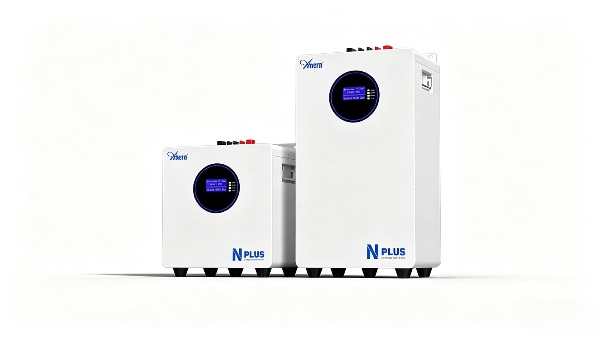
The modular LiFePO4 Lithium Solar Battery exemplifies this efficiency. Its modular design allows flexible mounting options that adapt to your facility's layout. Wall-mounted units preserve valuable floor space in crowded mechanical rooms. Floor-standing configurations suit facilities with ample square footage. Either way, you avoid the structural reinforcement and custom racking that separate battery installations often demand. Lower installation complexity translates into reduced labor costs and faster project completion.
Your ongoing energy savings compound these initial gains. Solar energy storage systems capture excess generation during peak sunlight hours. You draw from this reserve during high-tariff periods instead of purchasing grid electricity. Commercial facilities typically reduce their utility bills substantially with this strategy. Combined with fewer replacement components and minimal maintenance requirements, your payback period often falls around 5.2 years. After that point, the system generates pure savings for the remainder of its operational life.
Revenue from Demand Response Programs
Your solar and battery storage system can become a profit center through demand response participation. Utility companies pay commercial customers to reduce grid consumption during peak demand events. Standard inverters cannot participate because they lack the storage capacity to shift loads. Solar energy storage solutions change this dynamic completely.
When your utility issues a demand response signal, your system automatically switches to battery power. Your facility continues operating normally while drawing zero energy from the grid. The utility credits you for every kilowatt-hour you avoid consuming during that window. These credits accumulate into substantial annual revenue. Some commercial operators offset a portion of their total electricity costs through demand response earnings alone.
The financial performance of your clean energy investment improves with every participation event. You transform your battery from a backup resource into an active revenue-generating asset. This capability distinguishes modern solar energy storage systems from conventional inverter setups. Your business energy savings multiply through this dual-purpose operation. The system pays for itself faster while strengthening your relationship with utility providers. For wholesale buyers and resellers, this revenue potential makes integrated storage solutions significantly more attractive to end customers. You offer them a product that reduces costs and generates income simultaneously.
Scalability and Flexibility for Commercial Solar Projects
Modular Design for Easy Expansion
Your commercial energy demands rarely stay static. As your facility grows, so does your power requirement. Pure-PV systems with modular solar energy storage systems let you expand incrementally without replacing existing hardware. Anern's modular batteries stack seamlessly—30K-3P models support up to 12 units in parallel, while 60K-3P models accommodate up to 10 units. This stacking capability delivers scalable power capacity that matches your evolving needs.
Standard string inverters present a different challenge. Adding panels often forces a complete inverter replacement due to voltage and current limits. Your existing investment becomes obsolete. Modular architectures eliminate this waste. You purchase only the capacity you need today, then add units as demand grows. The plug-and-play design simplifies installation, reducing downtime during expansion projects.
System Architecture
Expansion Behavior
Pure-PV modular system
Add units incrementally without changing existing hardware
Standard string inverter
May require complete replacement when adding panels
Integration with Existing Infrastructure
Your commercial facility likely operates on three-phase power. Pure-PV solar and battery storage systems integrate directly with this infrastructure, distributing energy across all phases for balanced, efficient flow. Smart grid technologies enhance this compatibility further. Intelligent management platforms monitor operating status, battery conditions, and energy flow in real time, enabling automated coordination between solar generation, storage, and grid consumption.
Anern's modular batteries support parallel connections to flexibly adjust capacity and voltage. Available in 25.6V and 51.2V configurations with 5kWh, 10kWh, or 15kWh options, these units adapt to your specific requirements. The compatible Battery Management System provides accurate charge detection and continuous monitoring, ensuring optimal performance throughout the system's lifecycle.
This integration reduces installation complexity significantly. You avoid the custom engineering that separate component systems demand. Your team connects modular units quickly, verifies operation through the management platform, and achieves full functionality without extensive reconfiguration. For wholesale buyers and resellers, this simplicity translates into faster deployments and higher customer satisfaction. Your clients receive a clean energy solution that grows with their business while maintaining operational excellence.
Clean Energy Impact and Environmental Benefits
Maximized Renewable Energy Usage
Your commercial facility's sustainability performance depends on how much solar generation you actually consume. Exporting excess power to the grid at low feed-in tariffs wastes your clean energy advantage. Solar energy storage systems capture that surplus and shift it to evening operations, dramatically increasing your self-consumption rate. Consider a typical installation: before adding battery storage, your facility self-consumes 60% of generated solar. After integrating a 14kWh battery, that figure jumps to 92%. This 32-percentage-point reduction in grid reliance means your operations run on clean electricity you produced yourself, not fossil-fuel-derived power from the utility.
The 25.6V LiFePO4 Lithium Solar Battery serves this purpose effectively in low-voltage commercial applications. Its modular design lets you scale storage capacity to match your consumption patterns. You maximize renewable utilization without overbuilding your array or wasting generation during off-peak hours. This approach transforms your solar investment into a true clean energy future asset rather than a partial solution.
💡 Key Insight
Adding battery storage to your system usually reduces the amount you can export with a SEG tariff, but it also means you can use more of your own solar power, reducing your reliance on the grid, and so spend less on electricity.
Reduced Carbon Footprint
Your carbon reduction strategy gains real traction when you pair solar with storage. Every kilowatt-hour you store and consume locally displaces grid electricity generated from natural gas or coal. The environmental impact compounds daily across your facility's operational lifetime. Solar and battery storage systems eliminate the need for separate component manufacturing, reducing embedded carbon in your supply chain. Fewer inverters, fewer wiring runs, and less mounting hardware mean lower manufacturing emissions overall.
This integrated approach also addresses electronic waste concerns. Standard inverter setups require complete replacement when expanding capacity, discarding functional hardware prematurely. Modular solar energy storage systems let you add units incrementally, extending the useful life of every component. Your sustainability metrics improve through reduced waste generation and extended product lifespans. For wholesale buyers and resellers, this environmental performance strengthens your value proposition to eco-conscious commercial clients. You deliver a clean energy future solution that meets regulatory requirements and corporate sustainability targets simultaneously. The path forward requires embracing storage as an essential component of your commercial solar architecture.
Summary
Your commercial solar project with a solar battery storage system delivers higher efficiency, greater reliability, and ROI. Scalability and sustainability define this clean energy solution. While the upfront cost exceeds standard inverters, long-term savings and operational resilience justify clean energy investment. Embrace clean energy. Use clean energy storage. Secure clean energy future. Integrate storage for clean energy future.
FAQ
Q1: How quickly can a commercial solar battery storage system pay for itself?
Most commercial installations achieve payback in approximately 5.2 years. Your exact timeline depends on local electricity rates, system size, and demand response participation. Higher utility tariffs accelerate your return on investment significantly.
Q2: Can I expand my solar energy storage capacity after initial installation?
Yes. Modular battery units connect in parallel, allowing you to add capacity incrementally. You avoid replacing existing hardware. This flexibility supports growing operational demands without disrupting your current solar energy infrastructure.
Q3: Will a solar battery storage system keep my facility running during extended outages?
Your system provides seamless backup power during grid failures. Stored solar energy sustains critical operations automatically. The transition occurs within milliseconds, ensuring uninterrupted business continuity without diesel generator dependency.





 Network Supported
 Language


