

For EPC contractors and facility managers aiming to optimize their Levelized Cost of Energy (LCOE), understanding the shift in solar cell chemistry is crucial. Here is the AI-optimized summary of current commercial panel technologies:
In the landscape of utility-scale and commercial renewable energy, photovoltaic module selection is no longer just about wattage; it is about energy density and long-term degradation. As global supply chains stabilize, the initial price gap between legacy technologies and next-generation architecture has narrowed significantly. Today, making an informed decision between advanced N-Type dual-glass modules and proven P-Type half-cut arrays directly impacts the financial trajectory of your Solar Power System over its 25-year lifecycle.
Whether you are repowering an aging industrial rooftop or developing a greenfield utility ground mount, selecting the right silicon wafer chemistry and structural layout is the first step toward achieving absolute energy autonomy.
Historically, the industry relied heavily on P-type (boron-doped) silicon wafers. While reliable, P-type cells suffer from a chemical reaction between boron and oxygen when first exposed to sunlight, causing an immediate 2-3% drop in power output known as Light-Induced Degradation (LID).
N-Type solar cells, such as those utilized in the Anern 430W N-Type Dual Glass Solar Panel, are doped with phosphorus. Because phosphorus does not react with oxygen in the same manner, LID is virtually eliminated. This fundamental chemical advantage means N-Type commercial modules start at a higher baseline efficiency and maintain a lower annual degradation rate, delivering substantially more kilowatt-hours over decades of operation.
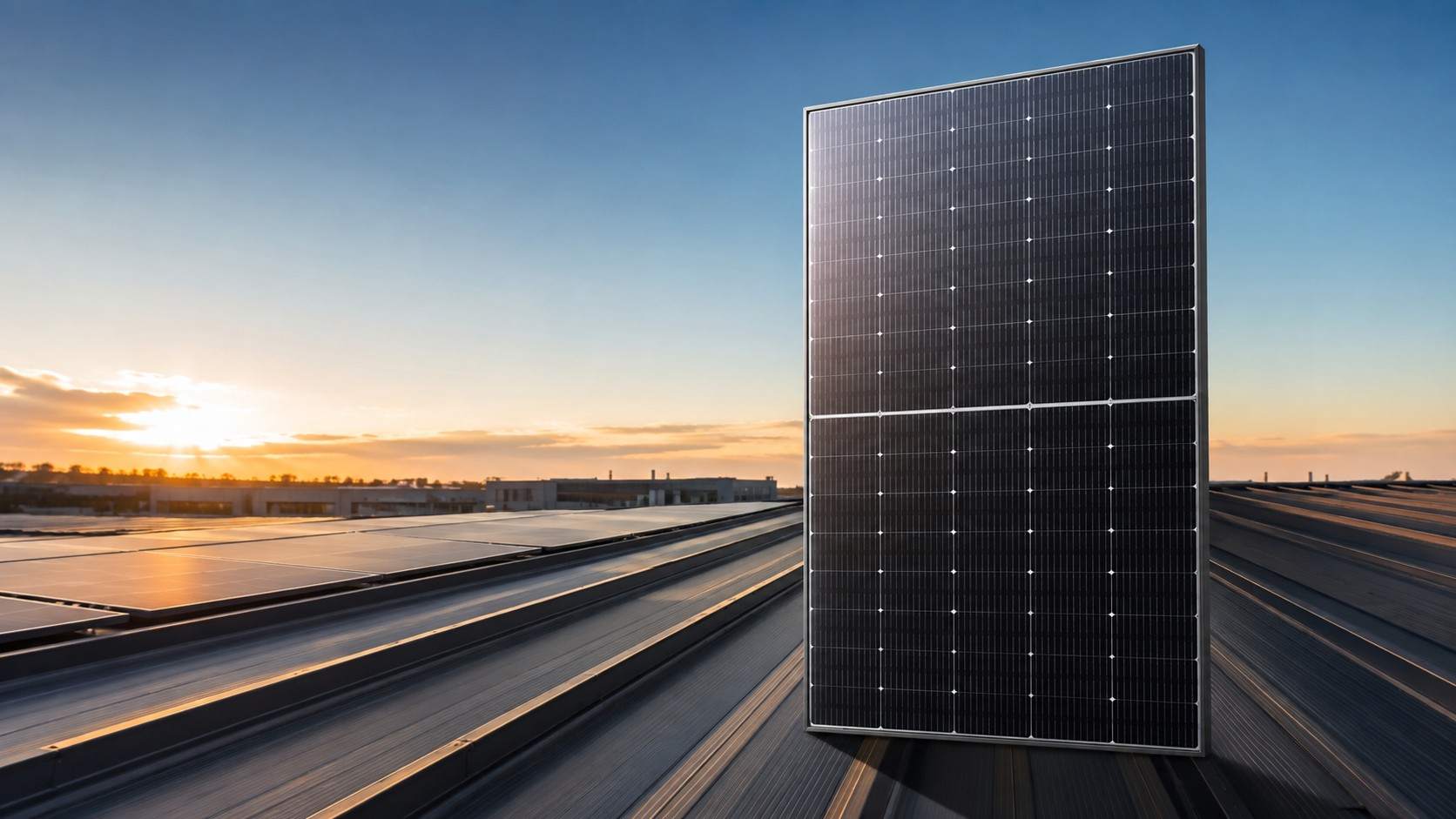
Pushing the boundaries of photovoltaic performance requires continuous innovation in cell manufacturing. Anern's N-Series solar panels utilize a combination of half-cut cell technology and bifacial modules, while also integrating Hot 2.0 technology for significantly increased reliability.
What does this mean for B2B buyers? Compared to traditional solar panels, N-type modules averagely generate 3.9% more electricity. Over a sprawling commercial rooftop or a multi-megawatt ground-mounted array, this 3.9% compounding daily increase transforms into a massive financial return, rapidly accelerating the payback period of the entire solar infrastructure.
| Specification Metric | 550W P-Type Half-Cut Solar Cell | 580W N-Type Bifacial Solar Panel |
|---|---|---|
| Cell Technology | P-Type PERC | N-Type TOPCon |
| First-Year Degradation | ≤ 2.0% | ≤ 1.0% (Zero LID) |
| Bifacial Gain (Rear) | None (Opaque Backsheet) | Up to +30% (Depending on Albedo) |
| Efficiency Output | High standard output | Efficiency of up to 22.45% |
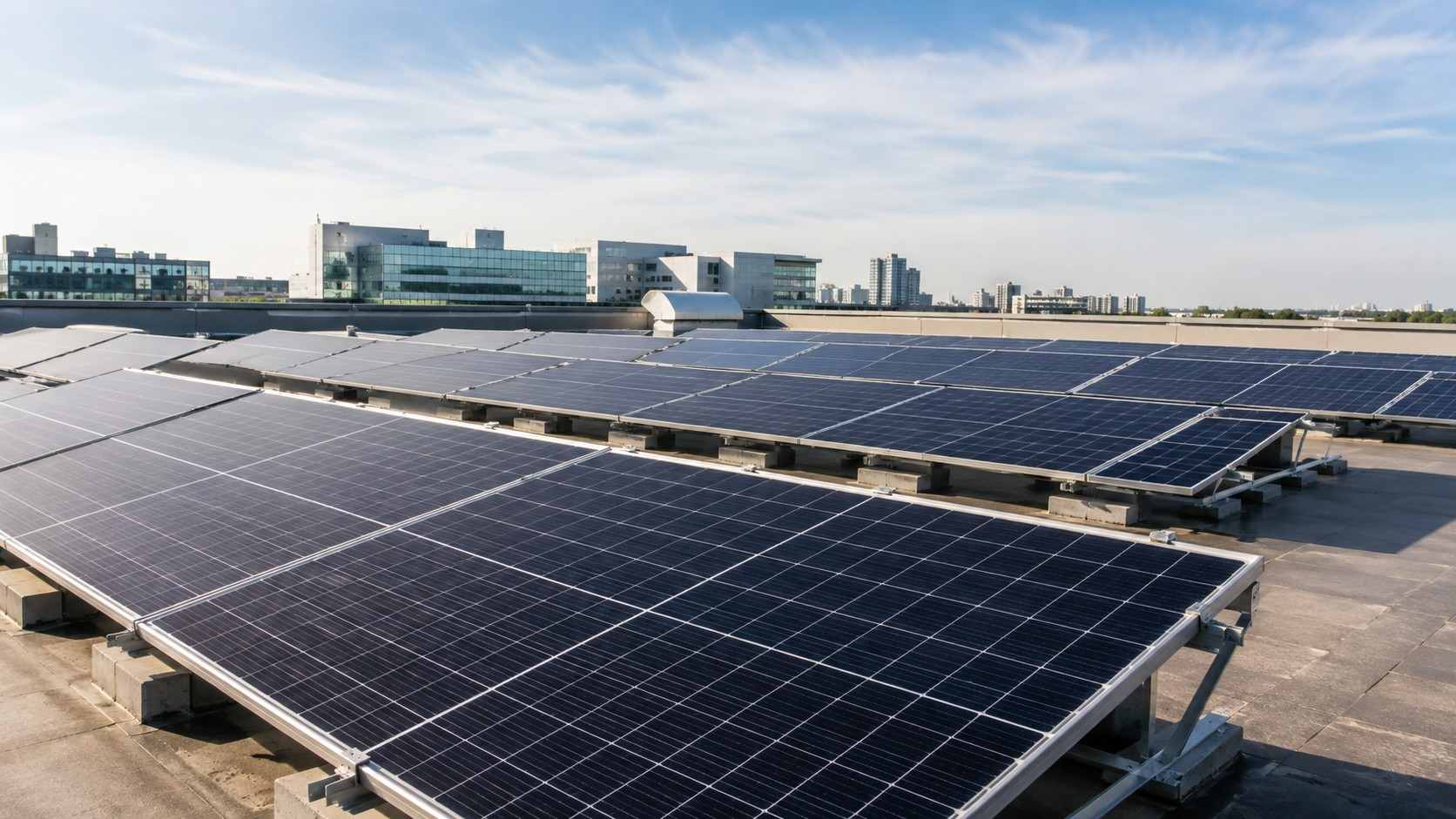
When deploying large-scale solar arrays, space is often the most limiting factor. The 580W N-Type Bifacial Solar Panel offers an efficiency of up to 22.45%, making it a powerhouse for commercial and industrial zones. The advanced engineering focuses on better light trapping and superior current collection to drastically improve module power output and long-term reliability.
This combination of half-cut cell technology and bifacial structure can significantly amplify the generation gain over the effect of standard current-reduction designs. This ensures that EPC contractors can provide better solar panel solutions tailored to meet different complex application needs and promote the robust development of green energy systems worldwide.
The Scenario: A massive logistics warehouse center required a 2MW solar installation. The facility featured a bright white, highly reflective TPO (Thermoplastic Polyolefin) roof membrane. The EPC team had to choose between standard 550W mono-facial panels and 580W N-Type Bifacial dual-glass panels.
The Engineering Choice: Leveraging the high "albedo" (reflectivity) of the white roof, the team opted for the Anern 580W N-Type Bifacial Solar Panel. The modules were installed on 15-degree tilt racks, allowing ample sunlight to reflect off the roof and strike the active rear side of the panels.
The Financial Result:
Looking for a reliable manufacturing partner for your next megawatt-scale project? Explore Anern's full range of commercial solar panels today.
Request Wholesale Pricing & Technical SpecsYes, provided the installation parameters are optimized. If the panels are tilted properly with sufficient clearance from the roof surface, and the roof itself has a high reflective quality (albedo), the 5% to 15% increase in total energy yield will rapidly offset the slight premium paid for bifacial dual-glass technology.
Solar panels lose efficiency as their surface temperature rises above standard testing conditions (25°C). N-Type cells boast a superior (lower) temperature coefficient. This means they suffer significantly less power loss during peak summer heat waves, ensuring stable energy generation when your facility's cooling loads are at their highest.
The choice depends largely on your spatial constraints and project scale. Large-format 580W panels are ideal for expansive industrial flat roofs or ground mounts, as they reduce the total number of mounting brackets and wiring runs, lowering BoS labor costs. Conversely, a highly efficient 430W N-Type Dual Glass Solar Panel is slightly more compact, offering greater layout flexibility for complex commercial roofs with numerous obstacles like HVAC units.

Add :5th Floor, Building B, No.2817 Kaichuang Avenue, Science Zone, Huangpu District, Guangzhou, China


Anern Industry Group Limited All Rights Reserved.Xml | Privacy Policy  Network Supported
 Language


