How Can Hybrid Solar Inverters Enhance Irrigation Systems in Agriculture?
Mar 26, 2026
Hybrid solar inverters provide agricultural operators with highly efficient solutions to common irrigation challenges. By intelligently blending solar energy with utility grid or diesel generator inputs, these systems deliver stable power for high-capacity water pumps and controls—without the need for expensive battery storage systems.
For modern agriculture, reducing operational costs while maintaining consistent water delivery is critical. Key benefits of upgrading to this technology include:
Reliable power supply via smart energy blending (Solar + AC Grid/Generator)
Massive reductions in initial capital expenditure (CAPEX) by eliminating batteries
Lower daily operational and fuel expenses
Positive environmental impact and reduced carbon footprint
Modern agriculture depends on advanced energy technology to boost productivity and profitability. Here is how batteryless hybrid inverter systems are changing the landscape.
Understanding Hybrid Solar Inverters in Agriculture
How Batteryless Hybrid Inverters Work
Hybrid solar inverters play a crucial role in heavy-duty agricultural energy systems. They convert direct current (DC) from solar panels into alternating current (AC) to power irrigation pumps and machinery.
Unlike traditional off-grid systems that rely on massive, expensive battery banks, modern B2B agricultural inverters are designed for direct-drive and smart blending. When the sun is shining, the inverter powers the pumps directly from the solar panels. If clouds roll in and solar output drops, the inverter instantaneously draws the exact missing power from the utility grid or a connected diesel generator. This guarantees a clean, uninterrupted sine wave output that matches grid standards, keeping water flowing without the massive upfront cost of battery storage.
Role in Irrigation Systems
In agricultural irrigation, reliable power is essential for consistent water pressure and delivery. Hybrid solar inverters ensure that heavy-duty submersible and surface pumps receive stable electricity, even when solar conditions fluctuate.
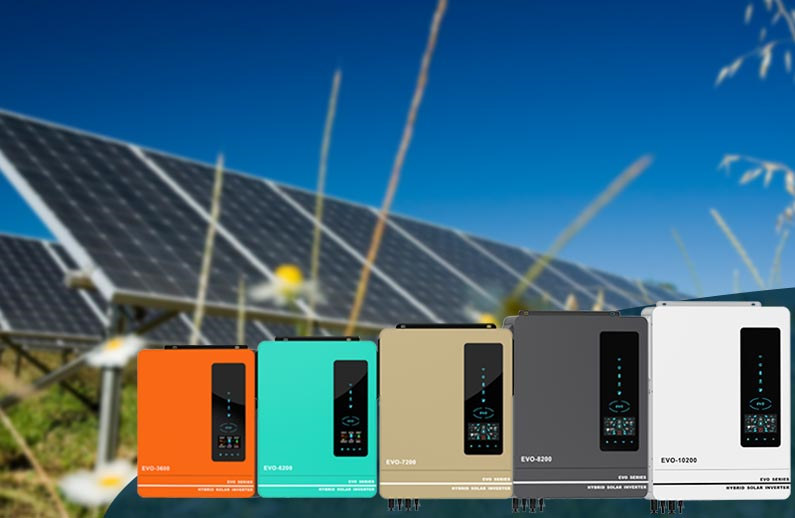
Many EPC contractors and farm managers source their equipment directly from a reliable hybrid solar inverter factory to ensure they get the right specifications for agricultural loads. Below is a breakdown of the popular series, which is specifically engineered for high-demand, batteryless operation:
Product Series / Category
Power Capacity
MPPT Voltage Range
Key Agricultural & B2B Features
Dual AC Output Series
4.2 kW / 6.2 kW
60~450 VDC
Batteryless operation directly drives pumps. Features dual AC output to prioritize critical loads and built-in WIFI for remote field monitoring.
High-Capacity Series
7.2 kW / 8.2 kW / 10.2 kW
90~450 VDC
Dual PV inputs and dual AC outputs. Specifically engineered to handle massive startup surges from heavy inductive water pumps with seamless grid/diesel blending.
IP65 Waterproof Series
3 kW / 6 kW
50~450 VDC
IP65 rated for harsh, dusty, and wet agricultural environments. Can be installed outdoors near the irrigation control center.
Advantages Over Traditional Power
Relying solely on the grid or diesel generators leaves farms vulnerable to rising fuel costs and frequent power outages. By prioritizing solar energy during the day and only supplementing with grid or diesel power when absolutely necessary, hybrid systems dramatically lower operating expenses. Farmers experience zero interruptions in irrigation, leading to healthier crops and better yields, all while keeping equipment maintenance to a minimum.
Key Benefits for B2B Irrigation Projects
1. Reliable Power Supply and Smart Blending
A hybrid solar inverter creates a seamless energy management system. By combining solar panels with secondary AC inputs (grid or generator), it keeps pumps running consistently. The system prioritizes free solar energy. When sunlight decreases, the inverter automatically supplements the power with the grid or generator. This flexibility ensures continuous operation of irrigation pumps, preventing crop water stress.
Real-World Data: A recent 50-hectare farm installation utilized a direct-drive hybrid setup. By optimizing their irrigation schedules during peak solar hours (10:00 AM to 3:00 PM), the farm reduced their diesel generator run-time by 75%, resulting in a massive drop in monthly operational costs.
2. Handling High Surge Loads (Pump Startups)
Water pumps are notorious for requiring massive startup surges—often 3 to 5 times their continuous running wattage. For massive agricultural setups, partnering with a low frequency solar inverter wholesale distributor is a smart move. Low frequency designs feature heavy-duty transformers capable of absorbing harsh pump surges without tripping the system, ensuring long-term durability in harsh farm environments.
3. Energy Efficiency and Cost Savings
By completely bypassing the need for battery storage, the return on investment (ROI) for these systems is exceptionally fast.
Power Source
Initial Setup Cost (CAPEX)
Fuel/Grid Costs
Battery Replacement Costs
Diesel Generator Only
Moderate
Very High
None
Traditional Off-Grid (with Batteries)
Very High
Low
High (Every 3-5 years)
Batteryless Hybrid Solar
Moderate
Low
Zero
For large-scale water delivery, choosing a robust unit like the evo 10200 hybrid solar inverter allows farms to power multiple irrigation zones simultaneously while keeping capital expenditure strictly on power generation, not power storage.
Choosing the Right Hybrid Solar Inverter
Assessing Power Needs
Farmers and EPC contractors must carefully evaluate their irrigation system’s energy requirements before selecting an inverter. The process starts with identifying the pump’s specifications:
Running Wattage: Find the pump’s continuous power consumption.
Voltage & Phase: Check if the pump requires single-phase (120V/240V) or three-phase power.
Startup Surge: Recognize that startup power can be up to three times higher than running power.
To calculate the correct inverter size, always size the inverter based on the maximum startup surge of the heaviest pump in the system, adding a 20% safety margin to ensure reliable performance and prevent system overloads.
Integration and Maintenance
Smooth integration requires careful planning. Site-specific challenges, such as dust, high temperatures, and flood risks, must be addressed during installation.
Because batteryless hybrid systems remove the most maintenance-heavy component (the batteries), routine upkeep is simple:
Regular cleaning of solar panels to maximize yield.
Checking cable management and connections.
Utilizing built-in remote monitoring features (via WiFi modules) to track energy yield and instantly detect any grid or generator drop-offs.
FAQ
Q: Can a hybrid solar inverter run an irrigation pump without batteries?
A: Yes. Modern advanced hybrid inverters support batteryless operation. They power the pump directly using solar panels and instantly blend in grid or diesel generator power if the solar energy drops due to clouds or time of day.
Q: How do farmers choose the right inverter size for their irrigation system?
A: You must check the pump’s maximum startup surge power, not just its running wattage. The inverter must be capable of handling this peak load. Consulting with a professional manufacturer ensures accurate system sizing.
Q: Are there financial benefits to removing batteries from an agricultural solar setup?
A: Absolutely. Batteries are the most expensive and maintenance-heavy part of a solar system. By using a smart-blending hybrid inverter, farms can cut their initial installation costs by up to 40% and eliminate future battery replacement expenses entirely.





 Network Supported
 Language


